The anomalous behaviour of lithium is as follows: Lithium is harder than other metals of the respective group. It has higher Melting and boiling point than other metals. As the polarizing power decreases with the increasing size of the ions the other alkali metal ions usually form anhydrous salts..
Beside this, what is the cause of anomalous Behaviour of lithium?
Anomalous behaviour of Lithium is due to 2) higher polarising power of Li+ resulting in increased covalent character of its compounds which is responsible for their solubility in organic solvents.
how are lithium and alkali metals different? The key difference between Lithium and other alkali metals is that the lithium is the only alkali metal that can react with nitrogen whereas the other alkali metals cannot undergo any reaction with nitrogen. Alkali metals are the group 1 elements of the periodic table of elements.
Similarly, what is anomalous Behaviour in chemistry?
Anomalous means deviating from the normal or usual order. For example, elements of 1st group(alkali metals) show similar properties, but lithium shows anomalous behavior. Li is harder and has high melting and boiling points.
Why is lithium harder than alkali metals?
Answer: Lithium is not hard. Lithium is light mainly because it has a low atomic mass and low density. So it is harder and lighter dissimilar to other alkali metals in its group.
Related Question Answers
Why lithium is least reactive with water?
Ionisation energy: Lithium's density is only about half that of water, so it floats on the surface and ultimately disappears, giving off hydrogen gas and forming a colourless solution of lithium hydroxide. But unlike the rest of the s-block elements, this reaction is not vigorous.Why is lithium least reactive?
Lithium is the least reactive because it is the one with the least electrons. That means the electrons are closer to the nucleus and therefore more attracted to it.Why Is Lithium the strongest reducing agent?
Alkali metals are very good reducing agents because of their great tendency to lose electrons. The reducing character increases from Na to Cs . However, Li is stronger reducing agent than Na due to greater hydration energy.What is the anomalous Behaviour of water?
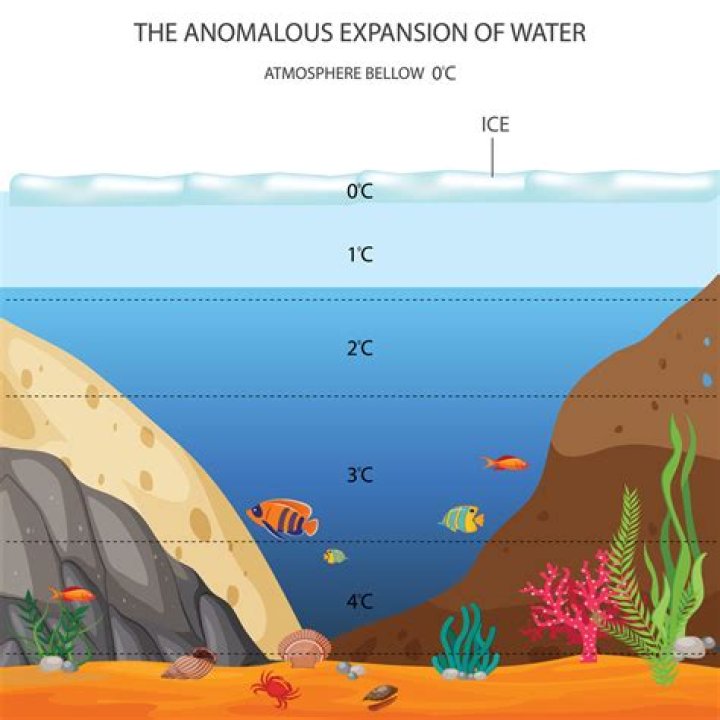
This anomalous expansion of water is an abnormal property of water whereby it expands instead of contracting when the temperature goes from 4°C to 0°C, and it becomes less dense. The density becomes less as it freezes because molecules of water normally form open crystal structures when in solid form.Why is lithium halide covalent?
Although lithium is an alkali metal yet its compounds., particularly halides, are slightly covalent in nature. This is because the Li* ion has small size and has maximum tendency to withdraw the electrons towards itself from the negative ion. Therefore, lithium halides are covalent in nature.Why lithium and beryllium are not ionic?
Lithium belongs to the family of Alkali metals whereas Beryllium belongs to the family of Alkali Earth Metals. In order to form ionic bonds an atom must lose electron easily to become positively charged ion or Cation. The lesser the ionization enthalpy the easier it is to form a cation and thus ionic bond.Why Li and Mg are similar?
Lithium resembles magnesium because of their similar size. Both Li and Mg are harder and have a higher melting point than the other elements in their respective groups. Hydroxides and nitrates of both Li and Mg decompose when heated to form an oxide. Hydroxides of Li and Mg are both weak alkali.Why does lithium behave like magnesium?
Due to small size, the lithium atom has high ionization energy. Hence, it remains inactive to dry air, slowly reactivity with water, liquid bromine and forms a highly stable hydride unlike other alkali metals. All these properties are exactly exhibited by magnesium. As magnesium it forms only monoxides.How do you study anomalous behavior?
There are five steps to study the anomalous behavior of water by using Hope's apparatus. They are, Step 1: A beaker filled with water is cooled along with the Hope's device an hour before conducting the experiment. Step 2: A cooling mixture is prepared using crushed ice and kitchen salt.What do you mean by anomalous?
deviating from or inconsistent with the common order, form, or rule; irregular; abnormal: Advanced forms of life may be anomalous in the universe. not fitting into a common or familiar type, classification, or pattern; unusual: He held an anomalous position in the art world. incongruous or inconsistent.What is analogous Behaviour?
Brame, 1998), we used data from the Cambridge Study in Delinquent Development to investigate the association between criminal activity and a set of so-called “analogous behaviors” (i.e., excessive drinking, smoking, gambling, involvement in accidents, etc.).Why does nitrogen show anomalous Behaviour in its group?
Anomalous behaviour of nitrogen: I)Nitrogen differ from of the members of this group due to its small size, high electronegativity, high ionisation enthalpy and non-availability of d orbitals. pπ -pπ multiple bonds with itself and with other elements having small size and high electronegativity (e.g., C, O).What is anomalous Behaviour of oxygen?
Anomalous behaviour of oxygen Oxygen forms strong hydrogen bonding in H2O which is not found in H2S. Also, the maximum covalency of oxygen is four, whereas in a case of other elements of the group, the valence shells can be expanded and covalency exceeds four.What is the definition of anomalous data?
Definition of anomalous. 1 : inconsistent with or deviating from what is usual, normal, or expected : irregular, unusual Researchers could not explain the anomalous test results.What is meant by diagonal relationship?
A diagonal relationship is said to exist between certain pairs of diagonally adjacent elements in the second and third periods of the periodic table. Diagonal relationships occur because of the directions in the trends of various properties as you move across or down the periodic table.Which is the hardest alkali metal?
Lithium
What is the difference between lithium and magnesium?
Magnesium has several other advantages over lithium in battery applications. Each magnesium atom releases two electrons during the battery discharge phase, compared to one electron for lithium. This gives it the potential to deliver nearly twice the electrical energy that is possible from a lithium cell.Why Lithium is the only alkali metal which forms nitride directly?
Lithium is the smallest atom among alkali metals. When Lithium reacts with nitrogen gas at room temperature (N2), it forms Lithium Nitride (Li3N) which is stable, because the lattice energy released from the formation of Li3N is high enough to make the overall reaction exothermic.What makes lithium to show properties uncommon to the rest of the alkali metals?
The unusual properties of lithium as compared to other alkali metals is due to (i) the exceptionally small size of its atom and ion, (ii) high polarising power (charge/size ratio) , (ii) high ionization enthalpy and (iv) absence of d-orbitals .